Updated September 2026. We rewrote this guide for 2026: platform rules have changed (Shorts and Reels now run longer, and TikTok now rewards videos over one minute), and every statistic below links to a current source.
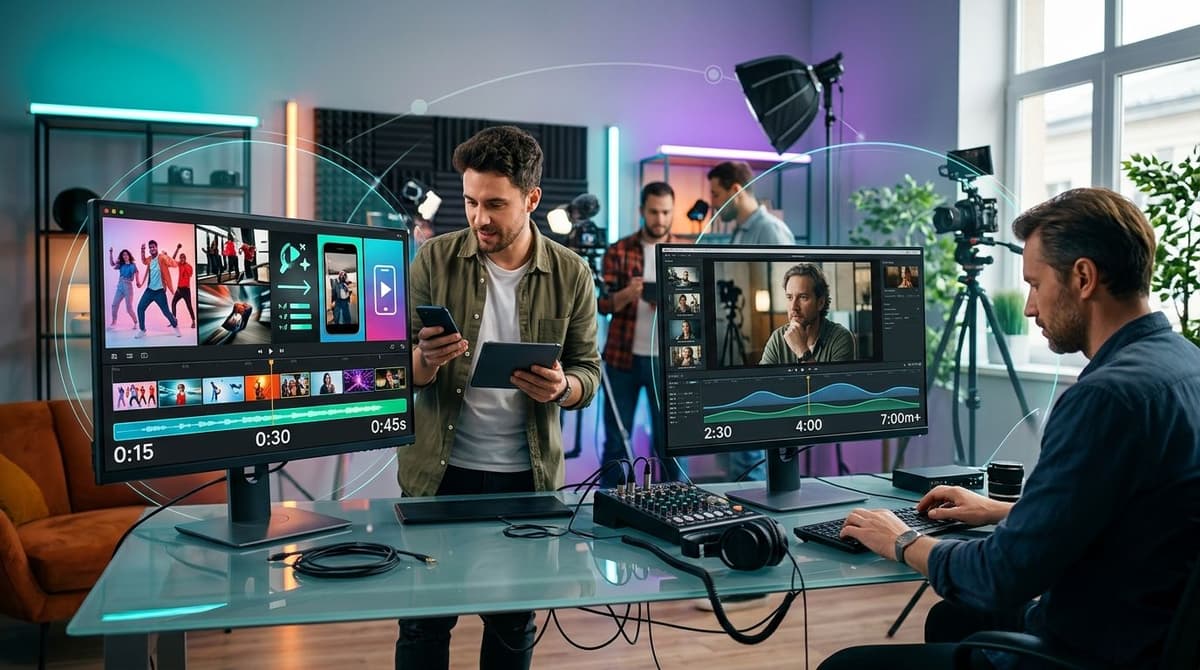
Your audience lives at two speeds. They flick through feeds in seconds, then sit down in the evening to watch a 20-minute breakdown or a documentary on their TV. A two-speed video strategy is built for both: short-form video to earn attention at scale, and long-form video to build the trust that turns attention into customers.
It's not about choosing one format. It's about giving each format a clear job and connecting them, so viewers move naturally from one to the other.
Short-form or long-form: which should you focus on?
If you have to start somewhere, start with short-form for reach, but plan at least one long-form piece your short clips can point back to. Short-form is where most people discover brands: in Wyzowl's 2026 survey, 63% of people said a short video is how they'd most like to learn about a product or service. Marketers see the same thing. In HubSpot's 2026 State of Marketing report, short-form video was the top ROI-driving content format (49%), ahead of long-form video (29%).
Short clips rarely close complex deals on their own, though. Long-form video (tutorials, case studies, interviews and brand films) is where viewers spend real time with your brand. As Wistia's 2026 State of Video report puts it, "A 10-minute video with a lower engagement rate still gets more total watch time than a 1-minute video with a higher engagement rate."
- Short-form (under about 90 seconds): discovery, reach, testing ideas and retargeting
- Mid-length (1 to 3 minutes): product explainers, plus Shorts and Reels that tell a complete story
- Long-form (3+ minutes): education, proof, storytelling and consideration

What changed for short and long video in 2026
The line between "short" and "long" has moved. Platforms that were built for 15-second clips now make room for, and often reward, longer videos:
- YouTube Shorts can be up to three minutes long (since October 2024), and YouTube says Shorts now average over 200 billion daily views.
- Instagram Reels can run up to 20 minutes, but Instagram notes that Reels over 3 minutes won't be recommended to new audiences, so keep discovery Reels under that.
- TikTok now pays Creator Rewards only for original videos over one minute long, a clear signal that it wants longer, higher-quality content.
- LinkedIn has a full-screen vertical video feed, and 8 in 10 teams in Wistia's 2026 report say LinkedIn is their primary place to share videos.
- YouTube on TV: viewers watch over one billion hours of YouTube on their TVs every day, which makes the living room a key screen for long-form brand content.
The takeaway: in 2026, "short-form" is less about a strict 15-second limit and more about a vertical, fast-paced format built for feeds. And long-form is no longer limited to YouTube.
Short-form video: your reach engine

Short-form video is how new people find you. It works in crowded feeds because it delivers one clear idea fast, and platforms can quickly test it with new audiences. Wistia's 2026 data backs this up: "The shorter the video, the higher the engagement rate." Viewers agree, too: 71% believe videos between 30 seconds and 2 minutes are the most effective (Wyzowl, 2026).
Use short-form video to:
- Win attention: open with a strong hook in the first seconds (see our guide to the 3-second hook).
- Test ideas cheaply: try different angles, hooks and offers before investing in bigger productions.
- Stay present: post consistently so your brand shows up in feeds every week.
- Retarget: serve short follow-up clips to people who already watched your long-form content.
Its limitation is depth. A 30-second clip can spark interest, but it can't fully explain a complex product, show a complete customer story or build lasting trust. That's the job of the second speed.
Long-form video: where trust is built

Long-form video gives people time to understand your product, see proof and connect with the people behind your brand. Engagement rates are lower than for short clips, but total watch time is higher, and that time is where consideration happens.
Educational authority
Tutorials, how-to guides, webinars and deep-dive explainers position your brand as the expert. They also keep working for months in YouTube and Google search, long after a short clip has left the feed.
Trust through storytelling
Stories need time to unfold. Customer case studies, behind-the-scenes films and brand films can show the problem, the solution and the result in full. That's what makes a viewer believe you can do the same for them.
Where long-form lives in 2026
YouTube is still the home of long-form video, and more and more of it is watched on TV. But long-form now also works on LinkedIn, on your website, in sales follow-ups, and as longer Reels and TikToks for audiences who already follow you. Search matters too: our social search video guide explains how both formats get discovered.
How to balance the two speeds

Build from one hero piece
The most efficient two-speed workflow starts with one strong long-form piece, such as an interview, a documentary-style brand story or an in-depth tutorial, which you then cut into many short clips for each platform. Wistia's 2026 report found that over half of companies already repurpose their video content into social clips, with LinkedIn the top destination.
A single well-planned shoot can supply weeks of short-form content, as long as you plan for vertical framing and strong standalone moments from the start.
Pick a starting rhythm, then let data decide
There is no universal "right" split. As a starting point, we usually suggest publishing short-form content every week and releasing a long-form piece every month or around each campaign. After two or three months, compare what drives reach with what drives enquiries and sales, and adjust the mix.
Budget for both
Short-form needs volume and speed, while long-form needs a bigger upfront investment but keeps delivering for longer. Planning both in the same production, rather than as separate projects, is the easiest way to keep costs under control. If you'd rather hand production to a partner, our roundup of the top social media video ad production agencies compares pricing models and what each one does best.
Platform-by-platform playbook for 2026
- TikTok: use short, hook-driven videos for discovery, and test longer (1 minute+) storytelling videos for followers, since TikTok now rewards them.
- Instagram: keep discovery Reels under 3 minutes, and use longer Reels, carousels and Stories for existing followers.
- YouTube: pair Shorts (up to 3 minutes) for discovery with long-form videos for search and TV viewing, and link each Short to a related long video.
- LinkedIn: share short vertical clips and longer thought-leadership videos. It is now the leading platform for B2B video.
- Your website: use short clips on landing and product pages, and embed long-form videos in case studies and resource pages so visitors stay longer.
For a deeper look at adapting content across platforms, read our multi-platform video strategy guide.
Measuring success across both formats

Judge each format by the job it's meant to do:
- Short-form: reach, views from non-followers, hook rate (how many viewers stay past the first seconds), shares and profile visits.
- Long-form: average view duration, completion rate, watch time, comments and clicks to your website.
- Both together: how many people who discover you through short clips go on to watch long-form content, visit your site or get in touch.
Tag every link with UTM parameters and connect platform analytics with your website analytics, so you can follow the full journey from first clip to enquiry.
Your two-speed video checklist
- Define one job for short-form (reach) and one for long-form (trust and conversion).
- Plan one long-form hero piece per month or per campaign.
- Film it with vertical clips in mind, and cut as many standalone short videos from each shoot as the content allows.
- Give every short clip a clear next step: follow, watch the full video or visit your site.
- Match length and format to each platform's 2026 rules.
- Review the numbers monthly and adjust the mix.
Put the two-speed strategy to work with 351 Studio
351 Studio plans and produces both speeds in one workflow. We create cinematic brand films and long-form stories, then turn them into platform-ready clips through our short-form video production and social media video ads services, with AI speeding up editing and versioning.
Ready to build a video strategy that works at every stage of the funnel? Book a free consultation and tell us about your goals.