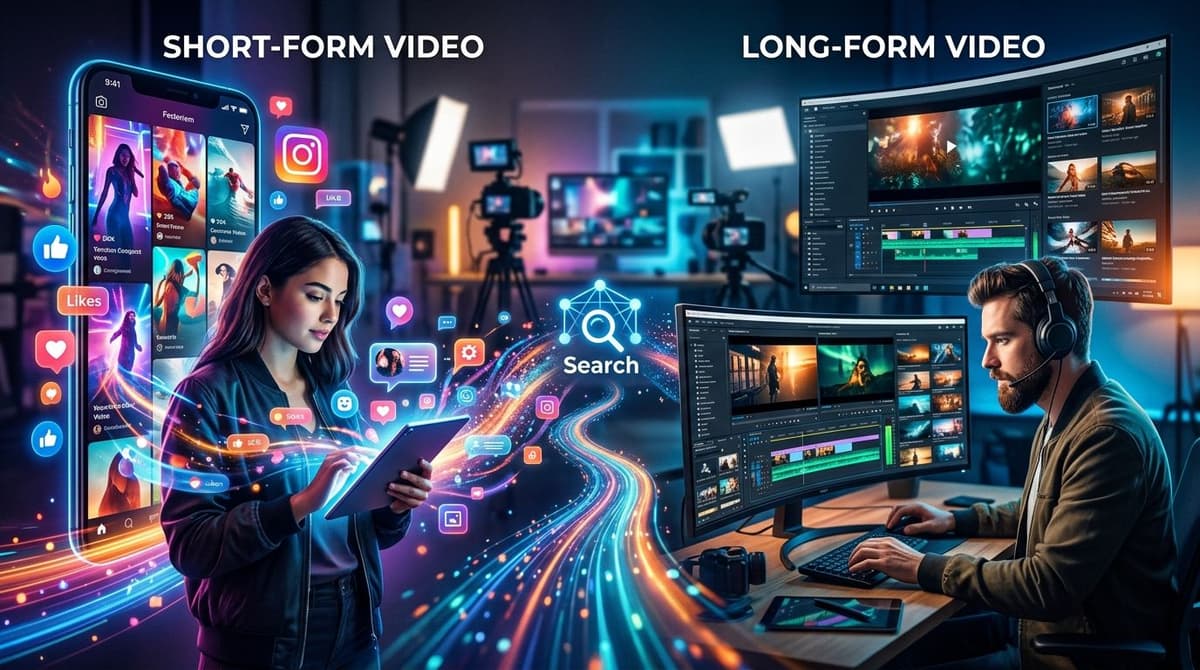
Social media has fundamentally transformed from simple networking platforms into powerful search engines where users discover, learn, and make purchasing decisions. With video content now dominating feeds across all platforms, understanding how to strategically balanceshort form vs long form videocontent has become crucial for brands seeking meaningful engagement.
The landscape ofsocial search videooptimization requires a nuanced approach. Users don't just scroll mindlessly anymore; they actively search for solutions, entertainment, and inspiration through video content. This shift demands that creators understand when quick, punchy content serves their goals versus when deeper, more comprehensive video storytelling creates lasting impact.
Understanding Social Search Video Dynamics

Social platforms have evolved their algorithms to function more like search engines. When someone opens TikTok, Instagram, or YouTube, they're often looking for specific information, much like they would on Google. This behavioral change means yourvideo content strategyneeds to consider both discoverability and user intent.
The Algorithm Advantage
Modern social algorithms prioritize content that keeps users engaged and satisfied with their search results. Videos that answer questions, solve problems, or provide value get rewarded with increased visibility. The key isn't just creating content that looks good but content that serves a genuine purpose in your audience's daily lives.
Smart brands recognize thatsocial media video optimizationgoes beyond hashtags and trending sounds. It involves understanding the search behaviors of your specific audience and creating content that intersects with their needs at the right moment in their customer journey.
Short-Form Video: The Power of Quick Engagement

Short-form videos excel at capturing attention in crowded feeds. These bite-sized pieces of content, typically ranging from 15 to 60 seconds, serve specific purposes in your overallvideo marketing strategy. They're perfect for introducing concepts, showcasing quick tips, or creating shareable moments that spark conversations.
Research shows that 73% of consumers prefer short-form videos when learning about products or services from brands on social media.
Measuring Short-Form Success
The success metrics for short-form content differ significantly from traditional marketing videos. Views, shares, and completion rates matter more than click-throughs to websites. These videos work best when they deliver immediate value or entertainment without requiring viewers to leave the platform.
Short-form content thrives on platforms like TikTok, Instagram Reels, and YouTube Shorts, where the algorithm rewards quick engagement and replay value. The most successful short-form videos often answer a specific question or demonstrate a quick solution, making them highly discoverable throughsocial search optimization.
Long-Form Content: Building Deeper Connections

While short-form videos grab attention, long-form content builds relationships. Videos lasting three minutes or longer allow for comprehensive storytelling, detailed explanations, and the kind of depth that establishes genuine expertise in your field.
When Long-Form Makes Sense
Long-form video content works exceptionally well for complex topics, educational content, behind-the-scenes stories, and detailed product demonstrations. It's where brands can showcase their personality, address objections, and provide the kind of value that converts viewers into loyal customers.
Long-form videos generate 4x more engagement on LinkedIn compared to other content types, making them particularly valuable for B2B marketing strategies.
The beauty of long-form content lies in its ability to keep audiences engaged for extended periods. This sustained attention sends strong signals to platform algorithms about content quality, often resulting in increased organic reach and better positioning in social search results.
Platform-Specific Video Content Strategy

Different platforms reward different types of video content, and successful brands adapt their approach accordingly. YouTube favors longer content that keeps viewers on the platform, while TikTok prioritizes short, engaging videos that encourage multiple views and shares.
Cross-Platform Considerations
The most effectivevideo content creationstrategies involve repurposing content across multiple platforms while respecting each platform's unique characteristics. A comprehensive tutorial might work as a long-form YouTube video, but key points from that same content could be extracted for short-form content on Instagram and TikTok.
LinkedIn users engage differently with video content compared to Instagram users. Professional audiences often appreciate longer-form educational content, while Instagram users typically prefer visually appealing, quickly consumable videos. Understanding these nuances is crucial for maximizingsocial video engagement.
Optimizing Your Video Marketing Strategy

The most successful brands don't choose between short and long-form content; they strategically use both. Yourvideo marketing impactmultiplies when you create a content ecosystem where different video formats serve different purposes in your customer journey.
Content Planning and Production
Effective video content planning starts with understanding your audience's search behaviors and information needs. At 351 Studio, we've seen how brands that align their video content strategy with actual user search patterns achieve significantly better results than those following generic content calendars.
Consider creating pillar content in long-form that thoroughly covers important topics, then extracting key insights for short-form content that drives traffic back to your comprehensive videos. This approach maximizes the value of your production efforts while serving different audience preferences and platform algorithms.
Successful video marketing isn't about choosing sides in the short versus long-form debate. It's about understanding when each format serves your audience best and creating a strategic mix that drives real business results.
The future belongs to brands that can seamlessly navigate both short and long-form video content, using each format's strengths to create comprehensivesocial media video trendsthat actually move the needle. Smart content strategies recognize that today's social platforms are search engines, and video optimization should reflect this reality.