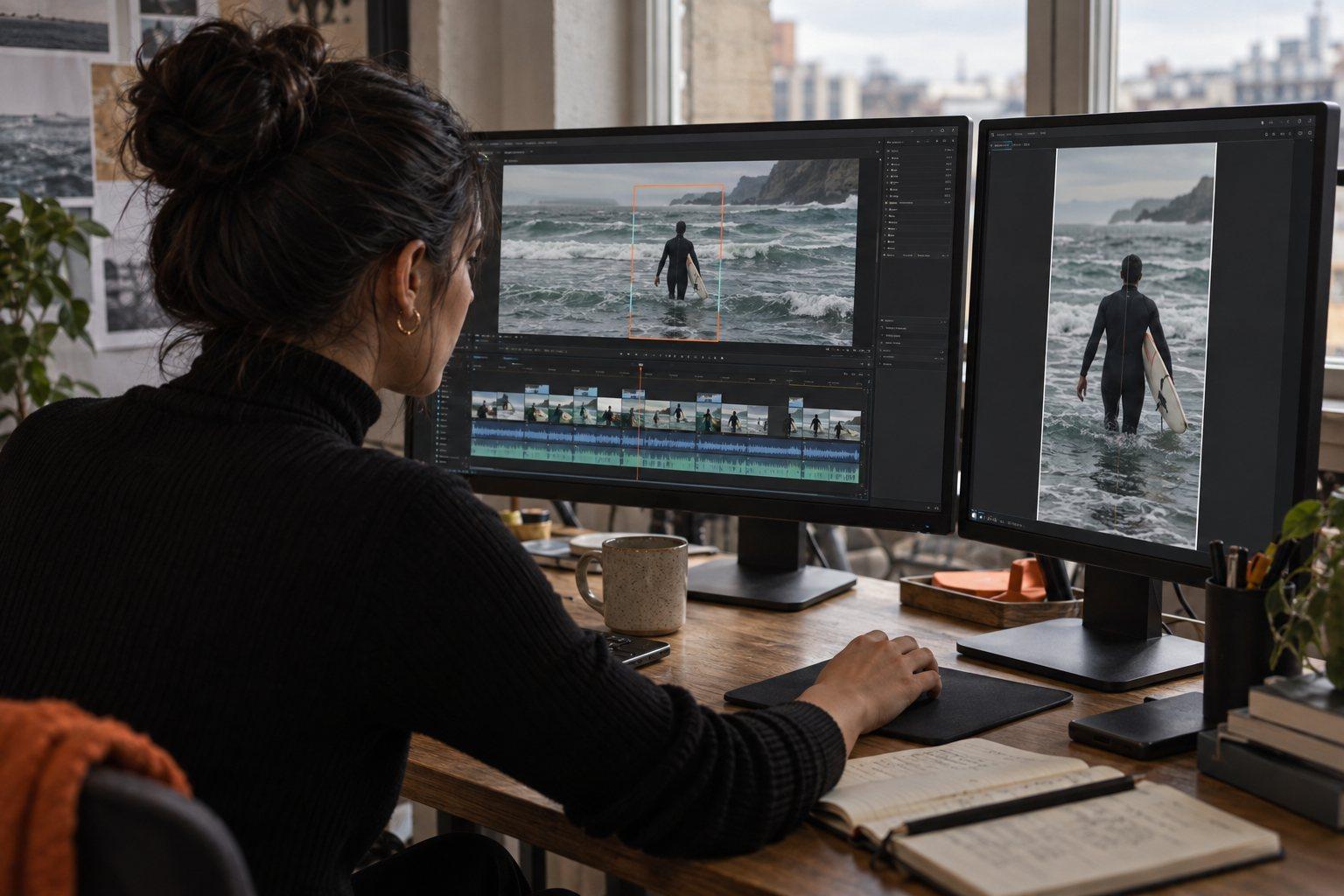
A 30 second AI ad is still built from 8 to 12 short shots. That's true even though one model, Seedance 2.5, has rendered 30 seconds in a single pass since July 31, 2026. Most AI video models cap one generation at 15 seconds and Veo 3.1 at 8 (invideo, Google), and in an October 2026 test only 13 of 48 commercial renders were client-ready (AIVideos.eu). So we board each spot as 2 to 6 second generations, send each shot to the model that handles it best, and cut them together.
This is the playbook we run at 351 Studio, step by step, with the decisions and the mistakes we've learned to avoid. If you're about to commission your first AI spot for paid social, CTV or a launch, it explains what the quote is actually paying for.
How long can AI video clips be at the end of 2026?
Fifteen seconds is the most common single-generation cap, according to invideo's August 2026 roundup. Kling 3.0 sits there, FLUX 3 runs to 20 seconds, and Seedance 2.5 does 30 seconds in one pass. Sora 2 gave all users 15-second clips and Pro users 25 seconds in the browser back in October 2025 (Digital Trends), though invideo reports its API was due to shut down on September 24, 2026.
Google sits at the short end. Veo 3.1 generates 4, 6 or 8 seconds, and 1080p and 4K only come at 8. You can extend a clip by 7 seconds up to 20 times, for 148 seconds, but only at 720p. And on October 22, 2026, Google shut down the Veo 3.1 Preview models in the Gemini API and named Gemini Omni Flash as the migration path. Its cap is unsettled: AIVideos.eu reports 3 to 10 seconds, while the same site's banner advertises 15.
So the old line that AI clips run 10 seconds is out of date. A one-pass 30 second AI ad now exists. The rest of this playbook explains why we still don't build spots that way.
Why is a 30 second AI ad still 8 to 12 shots?

Because length is an editing decision, not a model limit. A 30-second commercial typically needs 8 to 12 distinct shots, per Green Frog Labs, which puts the average shot at 2.5 to 4 seconds. That's the rhythm viewers expect from an ad. A 30-second single take reads as something else: a oner, a mood piece, a demo.
The second reason is risk. Every generation is its own gamble on faces, hands, product shape and light. In Richard Byrne's October 2026 test at AIVideos.eu, six commercial shot briefs ran on eight models, and only 13 of 48 renders were client-ready. No model delivered all six shots. Put the whole spot in one 30-second pass and one bad hand at second 19 sends you back to zero. Cut it into ten shots and you re-roll one.
Extension doesn't fix it either. An extension is a splice, not a memory: on our desk we see characters and light drift a little at every seam, and Veo's extensions drop to 720p. Even the model makers build around cuts. Kling 3.0 can fit up to 6 labeled shots inside one 15-second generation, per invideo.
"Real long-form is assembled shot by shot."
invideo, How Long Can AI Videos Be? (August 2026)
Before you start: what you need for a 30 second AI ad
You need five things on the table before anyone opens a model. Without them, generation turns into expensive guessing.
- One message and one call to action. Thirty seconds holds one idea, not three.
- Your delivery list. The 30-second master plus every cutdown and aspect ratio (15s, 6s, 9:16, 16:9), because it changes how we frame from the first keyframe.
- Real brand assets. Pack shots, logo files, fonts and legal supers. These go in during the edit.
- References for people and places. Casting looks, locations, wardrobe, or the brand world you already own.
- A disclosure decision. Where the ad runs and whether it needs an AI label. More on that in the checklist.
How does 351 Studio build a 30 second AI ad?

We treat generative models as a tool, not the director. At 351 Studio, people own the beat sheet, shot durations, reference locks, take selection, grade matching, product text and the final edit. AI makes the keyframes and the 2 to 6 second shots. That split is the whole method.
As an AI video production studio, we board your spot the way a film director would. We lock your characters, locations and wardrobe before anything is generated, then send each shot to the model that does it best. So the final cut plays as one film, not a string of AI clips. That's what our AI video production with characters and locations locked before we generate covers, and you can see the approach in how we made our AI-driven cinematic ad.
"Generation is cheap now. Knowing what to generate is not."
Richard Byrne, AIVideos.eu (October 2026)
The six steps below run in the order we work them.
Step 1: Time the AI video shot list to 30 seconds before you generate
Start from a beat sheet, not a prompt. We write the hook (0 to 3 seconds), problem, product, payoff and end card, then break each beat into shots with exact durations that add up to 30 on paper. Here's an example board for a fictional cold brew spot:
- Hook, 2.5s: close-up, a hand slaps an alarm off in a dark bedroom.
- 2s: wide, the hero shuffles into a small kitchen.
- 3s: medium close-up, she delivers one line to camera.
- 2.5s: insert, the fridge door opens on a single can.
- 3s: product hero, the can on the counter in morning light.
- 6s: one continuous take, she walks out the door and down the street as the light warms.
- 3s: a coworker's reaction as she arrives.
- 2.5s: close-up, the sip.
- 2.5s: payoff wide, the office wakes up around her.
- End card, 3s: built in the edit.
Ten shots, 30 seconds. Decision point: how many shots does your story need? Fast product spots sit near twelve; a single emotional moment can live with eight. Common mistake: writing one long prompt for a 30-second ad and hoping the model invents an edit. It won't cut where your brand needs it to.
Step 2: Lock characters, locations and wardrobe before the first generation

Consistency comes from references, not luck. Every character, location and wardrobe item gets a locked reference sheet before we generate anything. Every shot is built from those sheets, so the hero in shot 9 is the hero from shot 1.
In practice that means a face sheet from several angles, a full-length wardrobe sheet and a location plate for each set, all approved by the client. At 351 Studio those sheets stay pinned beside the monitor for the whole job. Decision point: generated cast or real talent? A real person's likeness brings consent and rights paperwork; a generated hero brings disclosure questions. Pick at the brief. Common mistake: changing a costume mid-project. Swap the jacket in week two and every approved shot needs regenerating.
Step 3: Approve keyframes, then generate each shot with handles
Sign off on stills before you pay for motion. We generate a keyframe for every shot, get client approval on the frames, then move to image-to-video. Coca-Cola's team worked the same way on its 2025 "Holidays Are Coming" ad, going from still images to image-to-video to color tweaks and clean-up in post, per TheWrap.
Then we generate each shot longer than its slot. A 4-second generation for a 2.5-second slot gives a second or so of handle on either side. In our edits we cut on action, not on the generation's first frame. Decision point: which shots need motion approval as well as frame approval? Anything with a performance usually does. Common mistake: chaining extensions to fill time. We don't. Each seam adds drift, and on Veo you lose resolution.
Step 4: Which AI model gets which shot?
Picking the model is part of the shot list. The same brief can succeed on one model and fail on another, which is exactly what the AIVideos.eu test found, so we route shot by shot. Using the board above:
- Lines to camera: a model with native dialogue and sound, the Veo family, now Gemini Omni Flash on the Gemini API. Shot 3.
- Short coverage: Kling 3.0 multi-shot, up to 15 seconds with native audio, per Higgsfield's October 2026 guide, which points to Kling 4.0 for longer scenes and keyframed moments. Shots 1, 2 and 4.
- Long single takes: Seedance. Its 30-second pass suits a oner, not a montage. Shot 6.
- Product heroes and legible text: a generated plate with the real pack shot composited in the edit. Shot 5.
Decision point: how will the grade match across three models? We set a shared look in the keyframes so the colorist has less to pull together. Common mistake: running every shot through every model to be safe. In the same test, rendering everything cost $50.89, while the cheapest usable clip per shot came to $5.02.
Step 5: What does selection really cost in takes and days?

Shot count drives budget more than running time, because every shot is generated, selected and matched on its own. Selection is where the hours go.
Coca-Cola's five AI specialists sorted through more than 70,000 clips in 30 days for the 2025 holiday ad (TheWrap). At the lean end, Kalshi's June 2025 ad went from idea to live in 3 days for about $2,000, with 20 to 30 runs to get the nuances right, as reported by Business Insider and cited by AIVideos.eu. And a product-only 30-second vertical ad built from five Veo 3.1 Fast clips plus an end card cost $3.73 and took 47 minutes, per CSuite, with no actors and no continuity to hold.
"AI is a cheap session crew. You are still the director."
CSuite, How to make a 30-second AI video ad, end-to-end (July 2026)
The gap between $3.73 and a brand spot is characters, continuity and selection time. Decision point: agree the shot count and revision rounds before generation, because that's the real budget line. Common mistake: pricing by seconds of finished video. A 30-second spot with twelve shots costs more to make than a 30-second oner.
The rule we quote by: count the shots, not the seconds. Each shot is its own generation, its own selection and its own grade match.
Step 6: Cut, grade and finish the brand in the edit
The edit is where ten generations become one film. We cut on action, match the grade across models, and add logos, supers, legal text and the end card in the edit, never in the prompt. Your logo isn't something to gamble on in a generation.
From the same set of approved generations, 351 Studio cuts the 30-second master plus 15-second, 6-second and vertical versions. Because we framed for 9:16 at the keyframe stage, the vertical cut isn't a crop job. That's how one master turns into paid social video ads built from the same shot list. Decision point: which cutdown leads on each platform? Common mistake: treating cutdowns as an afterthought and finding the hook only works in 16:9.
Checklist: what to ask before you commission a 30 second AI ad
Ask these before you sign. A good studio answers all of them on the first call.
- Can I see the timed shot list and the locked character, location and wardrobe sheets before generation starts?
- Which models will you use for which shots, and how do you match the grade across them?
- How many revision rounds are included, and how many cutdowns and aspect ratios come from the same generations?
- Do we need disclosure? From August 2, 2026, EU AI Act Article 50(4) can require labels on AI content in ads that counts as a deepfake, per Lewis Silkin as cited by AIVideos.eu. Settle it at the brief.
- Are commercial usage rights for every generated asset in writing?
AI ad FAQ: length, cost and consistency
Can AI make a full 30-second commercial in one generation?
Technically yes: Seedance 2.5 has rendered 30 seconds in one pass since July 31, 2026. But one pass is one take with no edit, and in testing most commercial renders still miss, so we build spots from shorter shots we can re-roll one at a time.
How do you keep the same character across multiple AI video clips?
Lock reference sheets for face, wardrobe and location before generating, then build every shot from those references. Approving keyframes first catches drift before you pay for motion.
Is it better to extend an AI clip or cut between separate shots?
Cut between separate shots. Extensions drift at every seam and, on Veo 3.1, drop to 720p, while separate shots with handles let you cut on action.
How much does a 30-second AI commercial cost in 2026?
It depends on shot count and continuity. Published examples run from $3.73 in generation for a product-only ad to about $2,000 for Kalshi's spot. Green Frog Labs quotes $5,000 to $7,000 AI-native for a spot it says costs $14,800 traditionally (vendor figures).
We make 30-second AI spots, cutdowns and vertical versions that hold one cast and one look from the first frame to the end card. See the kind of work we ship in our portfolio, read how our AI video production works, and when you're ready, send us your 30-second brief.
Sources
“Real long-form is assembled shot by shot.”
invideo, How Long Can AI Videos Be? Max Length for Every Model (Aug 2026)View source
“Use Veo 3.1 to extend videos that you previously generated with Veo by 7 seconds and up to 20 times.”
Google (Gemini API documentation), Generate videos with Veo 3.1 in Gemini APIView source
“Generation is cheap now. Knowing what to generate is not.”
Richard Byrne, AI Commercial Production: Make It Yourself or Have It Directed?View source
“That level of precision suggests the team had to go way beyond just simple prompting,”
Casey Loving, How Coca-Cola Made Its AI Christmas Ad With 5 Specialists Tackling 70,000 ClipsView source
“AI is a cheap session crew. You are still the director.”
CSuite, How to make a 30-second AI video ad, end-to-endView source
“A 30-second commercial typically needs 8-12 distinct shots”
Green Frog Labs, 30 Second Commercial Cost 2026: $1,500-$50K for Most BrandsView source
“Use Kling 3.0 for multi-shot clips up to 15 seconds with native audio.”
Higgsfield, Kling 4.0 and 3.0 Prompt Guide: 10 Prompts and Settings That Work (2026)View source
“Pro in the browser stretches to 25 seconds”
Digital Trends, Sora 2 just unlocked longer clips, but there's a catchView source
Filed under