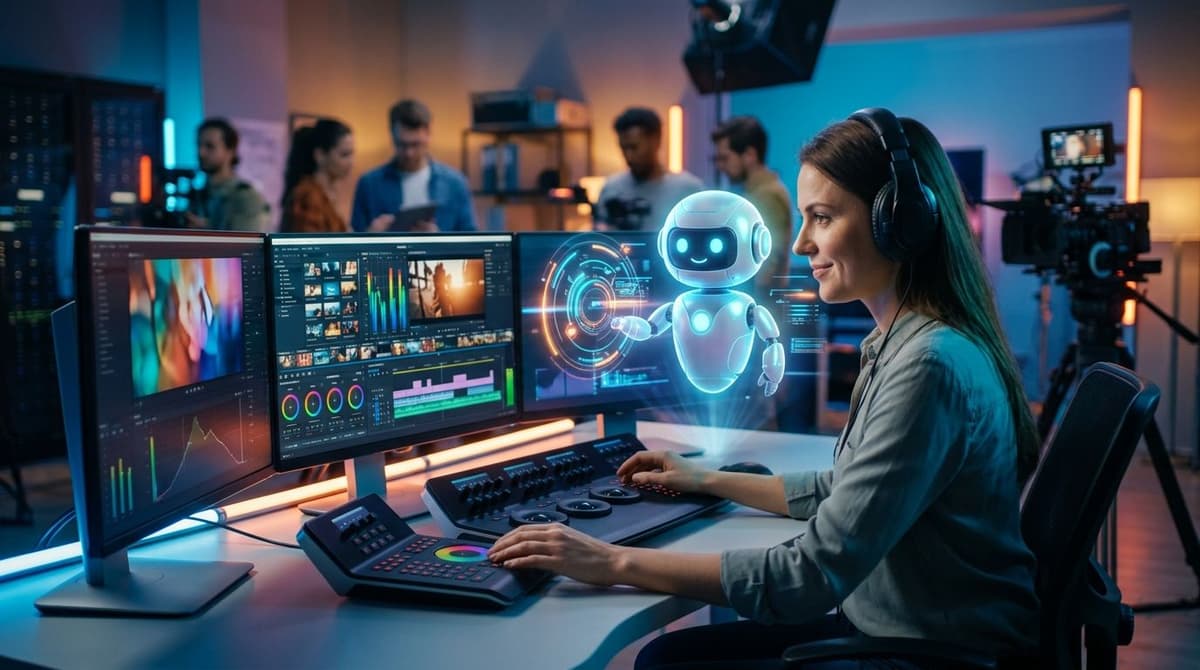
The video production landscape is experiencing its most significant transformation since the shift from film to digital. As we approach 2026, artificial intelligence isn't just knocking at the door of creative industries—it's reshaping how we conceive, create, and deliver video content. But here's what most people get wrong: AI isn't coming to replace video professionals. It's here to serve as an incredibly powerful co-pilot.
Think about it. Every day, video creators spend countless hours on tasks that, while necessary, don't require human creativity. Color matching footage from different cameras. Syncing audio across multiple takes. Searching through hours of B-roll for that perfect three-second clip. These are the moments where AI video production tools shine brightest.
The Current State of AI Video Production

We're not talking about science fiction here. AI video editing tools are already transforming how forward-thinking studios operate. Major platforms like Adobe Premiere Pro, DaVinci Resolve, and newer players like Runway and Synthesia are integrating machine learning capabilities that would have seemed impossible just five years ago.
The numbers tell a compelling story. According to recent industry research, 73% of video production companies have already experimented with AI tools, and 45% use them regularly in their workflows. But here's where it gets interesting: most are only scratching the surface of what's possible.
Current automated video production capabilities include intelligent scene detection, automatic transcription with 95%+ accuracy, smart color correction that learns from your preferences, and audio enhancement that can isolate dialogue from noisy environments. These aren't experimental features anymore—they're production-ready tools that studios like 351 Studio are using to deliver higher quality work faster than ever before.
Machine Learning in Post-Production
Machine learning algorithms are revolutionizing post-production workflows by learning from vast datasets of professionally edited content. These systems can identify optimal cut points, suggest transitions, and even match the pacing of reference videos. The technology analyzes frame composition, motion, and audio patterns to make intelligent editing decisions.
Natural Language Processing for Content
NLP technology is transforming how we interact with video content. Modern AI video technology 2026 will enable editors to search footage using natural language queries like "find shots of the CEO looking confident" or "show me all B-roll with natural lighting." This capability extends to automatic subtitle generation, content summarization, and even script analysis.
Core AI Technologies Transforming Video Workflows

Let's break down the specific technologies that are making this transformation possible. Understanding these core systems helps production teams make informed decisions about which AI-powered video creation tools to integrate first.
Computer vision leads the charge by analyzing every frame of video content. It can identify objects, people, locations, and even emotional states. This technology powers features like automatic object removal, face detection for privacy compliance, and intelligent cropping that maintains visual interest across different aspect ratios.
Audio processing AI has reached remarkable sophistication. Modern systems can separate individual instruments from a mixed track, remove background noise while preserving natural speech patterns, and even generate synthetic dialogue that matches a speaker's voice characteristics. The implications for video production AI are profound—imagine fixing audio issues that would have required expensive reshoots.
Computer Vision for Smart Editing
Advanced computer vision systems can analyze video content at multiple levels simultaneously. They track objects across frames, understand scene composition, and identify optimal moments for cuts based on action peaks and emotional beats. This technology enables automated highlight reel creation and intelligent multi-camera editing.
Predictive algorithms take this further by anticipating what comes next in a sequence. They can automatically adjust exposure for upcoming scenes, pre-load effects based on content analysis, and suggest shot sequences that maintain visual continuity.
Real-World Applications of AI Video Workflow Automation

Theory is one thing, but how does this actually play out in real production environments? Let's examine specific applications that are already changing how video professionals work.
Automated rough cuts represent one of the most immediate time-savers. AI systems can analyze script timing, identify key moments in interviews, and create initial assemblies that would take human editors hours to complete. While these rough cuts need creative refinement, they provide a solid foundation that accelerates the entire process.
Content adaptation across platforms has become significantly more efficient. AI can automatically generate vertical versions of horizontal content, create different duration cuts for various social platforms, and even adjust pacing based on platform-specific engagement patterns. This means one piece of source content can efficiently become dozens of optimized deliverables.
Automated Content Generation
AI excels at creating supplementary content that supports main video pieces. This includes automatic generation of social media teasers, behind-the-scenes content compilation, and even personalized versions of videos for different audience segments. The technology can analyze engagement data to optimize content variations automatically.
Intelligent Asset Management
Modern AI systems transform how production teams organize and retrieve assets. Instead of manually tagging thousands of clips, AI automatically categorizes footage by content, quality, and potential use cases. Search functionality becomes intuitive—teams can find "outdoor interviews with good lighting" or "product shots suitable for web banners" instantly.
Version control and project management also benefit from AI analysis. Systems can track changes across project iterations, identify potential conflicts before they become problems, and even suggest optimal project structures based on content type and team size.
Building Your AI-Enhanced Production Pipeline

Implementing intelligent video workflows requires strategic thinking, not just technology adoption. The most successful studios approach AI integration as a gradual process that enhances existing capabilities rather than replacing established workflows overnight.
Start with tasks that offer immediate value and low risk. Audio synchronization, basic color correction, and asset organization are perfect entry points. These applications provide clear time savings without affecting creative decisions. As teams become comfortable with AI tools, they can gradually expand into more sophisticated applications.
Integration Strategies
Successful AI integration requires careful planning around existing tools and team skills. The best approach often involves choosing AI solutions that work within current software ecosystems rather than requiring completely new platforms. This minimizes disruption while maximizing adoption rates.
Consider workflow compatibility when selecting AI video editing tools. Solutions that integrate seamlessly with established platforms like Adobe Creative Suite or Avid Media Composer typically see faster adoption and better results than standalone systems requiring significant workflow changes.
Team Training and Adoption
Human expertise remains crucial in AI-enhanced workflows. Teams need training not just in using AI tools, but in directing them effectively. This includes understanding when to trust AI recommendations, how to refine AI-generated content, and recognizing the limitations of automated systems.
Creating clear protocols for AI usage helps teams maximize benefits while maintaining quality standards. Document which tasks are appropriate for AI automation, establish review processes for AI-generated content, and define escalation procedures when AI tools produce unexpected results.
Overcoming Challenges in AI Video Implementation

Every technological shift brings challenges, and AI video workflow automation is no exception. Understanding these obstacles upfront helps teams prepare effective solutions and set realistic expectations.
Cost Considerations
AI tools often require significant upfront investment in software licenses, training, and potentially hardware upgrades. However, the math usually works in favor of adoption when calculated over time. Studios report that AI tools typically pay for themselves within 6-12 months through efficiency gains and expanded capacity.
Consider both direct costs (software, training, hardware) and indirect benefits (faster turnarounds, higher client satisfaction, ability to take on more projects) when evaluating AI investments. Many studios find that AI enables them to increase project volume without proportionally increasing staff.
Technical Limitations
Current AI technology excels at specific tasks but struggles with context-dependent creative decisions. AI can identify the technical best cut point but might miss the emotional significance of extending a pause for dramatic effect. Understanding these limitations helps teams use AI effectively while maintaining creative control.
Quality control becomes more important, not less important, in AI-enhanced workflows. Teams need robust review processes to catch AI errors and ensure that automated processes align with creative vision and brand requirements.
Creative Boundaries
The biggest challenge might be philosophical: maintaining creative integrity while embracing automation. The key is viewing AI as a powerful assistant rather than a creative replacement. AI handles technical execution while humans focus on storytelling, emotional resonance, and strategic communication.
Establishing clear creative guidelines helps teams leverage AI effectively while preserving their unique voice and style. Document your creative principles, define non-negotiable quality standards, and create approval workflows that ensure AI-generated content aligns with brand values.
The Future of Intelligent Video Workflows

Looking toward 2026 and beyond, several trends are shaping the evolution of AI video production. Real-time rendering capabilities will enable instant previews of complex effects and corrections. Collaborative AI will facilitate better remote teamwork by automatically syncing changes and maintaining version control across distributed teams.
Predictive content optimization represents perhaps the most exciting frontier. AI systems will analyze audience engagement patterns, viewing habits, and performance metrics to suggest content modifications that improve viewer retention and conversion rates. This goes beyond basic A/B testing to predictive content creation.
We're also seeing the emergence of AI directors that can analyze scripts and suggest shot lists, lighting setups, and even casting decisions based on successful precedents. While human creativity remains irreplaceable, these tools can inform and inspire creative decisions.
The integration between AI video production and other marketing technologies will deepen significantly. Expect to see AI systems that automatically adjust video content based on viewer demographics, create personalized versions for different market segments, and optimize distribution timing across platforms.
For studios ready to embrace this future, the opportunity is enormous. Those who master AI video workflow automation will deliver better results faster while freeing creative talent to focus on the strategic and artistic elements that truly differentiate their work.
The question isn't whether AI will transform video production—it already has. The question is whether your team will lead this transformation or be forced to catch up later. The co-pilot seat is available now. The choice is whether to climb aboard or watch others take flight.